

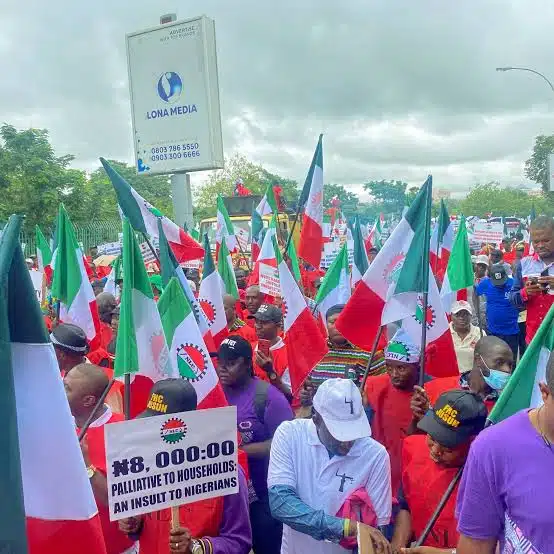

The Nigeria Labour Congress (NLC) and the Trade Union Congress (TUC) is ready to reopen negotiations with the Federal Government over a new national minimum wage, warning that soaring inflation and rising living costs have rendered the current wage structure inadequate for millions of workers.
The labour centres said they would begin the process of renegotiating the minimum wage by July 2026, insisting that Nigerian workers deserve a “genuine living wage” that reflects the country’s prevailing economic realities, particularly the rising costs of food, transportation, housing and healthcare.
The position was contained in a joint address delivered at the 114th International Labour Conference in Geneva, Switzerland, where organised labour also rejected any proposal to tax the minimum wage or impose additional fiscal burdens on low-income earners.
Nigeria’s current minimum wage of N70,000 was signed into law in July 2024 following an agreement between the Federal Government and organised labour. While the original arrangement provided for a three-year review cycle, the government later announced in January 2025 that the wage would henceforth be reviewed every two years, making 2026 the next review period.
With the review window approaching, labour leaders said they would formally write to the government immediately after the Geneva conference to ensure negotiations commence early and avoid the prolonged delays that have characterised previous wage reviews.
“The current Act expires early next year, and we have announced that renegotiation will commence by July 2026 to avoid the painful delays of the past. As soon as we leave here, we shall write again to the government demanding the commencement of the process for renegotiating the national minimum wage,” the unions stated.
According to the labour movement, inflation, currency depreciation and rising prices of essential goods and services have significantly eroded workers’ purchasing power, leaving many households under severe economic pressure. The unions argued that official economic indicators do not adequately reflect the realities faced by ordinary Nigerians.
They warned that taxing the minimum wage would further deepen poverty and hardship among low-income earners and called on governments at all levels to implement immediate relief measures pending the conclusion of fresh wage negotiations.
“We demand nothing less than a genuine living wage that reflects today’s harsh economic realities. We also demand immediate relief measures by governments at all levels until a new minimum wage is signed into law. We reject outright any attempt to tax the minimum wage or impose further burdens on the poor,” the communiqué read.
Beyond wage issues, organised labour used the Geneva platform to draw attention to worsening insecurity, unemployment and poverty across the country. The unions noted that killings, kidnappings and displacement in several parts of Nigeria have made commuting unsafe for workers and disrupted economic activities.