

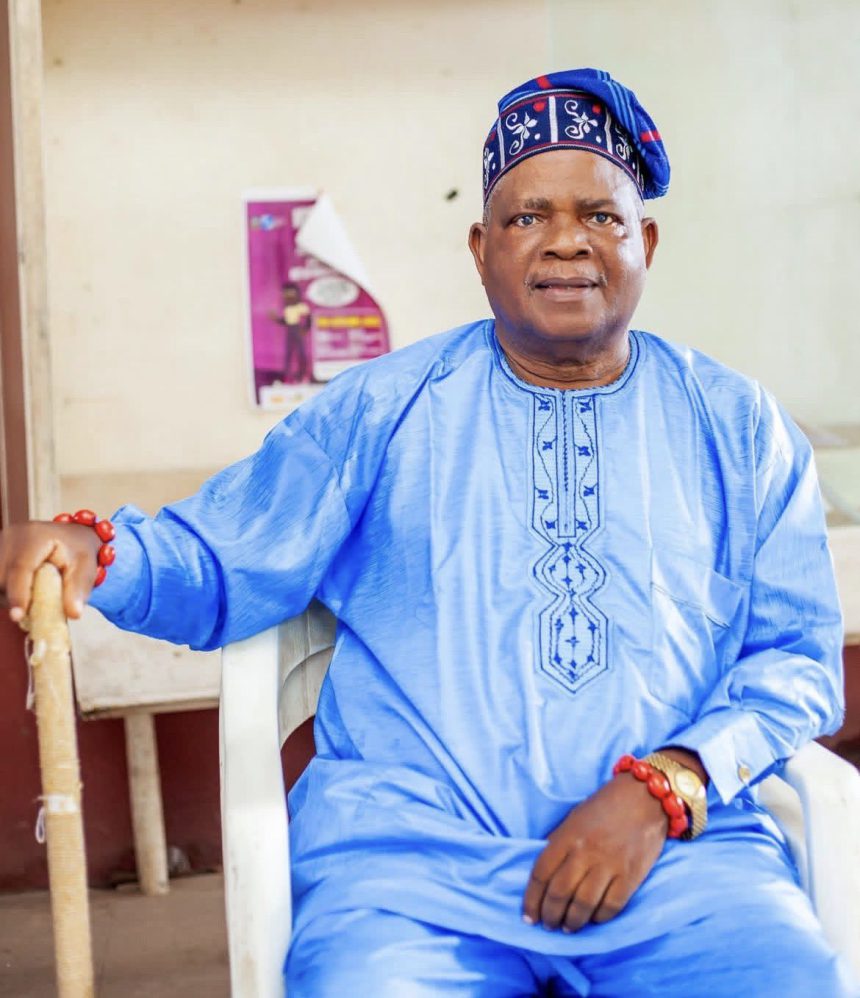

Nigeria’s creative and academic circles have been thrown into mourning following the death of veteran actor, filmmaker and theatre scholar, Dr. Kola Oyewo. The revered thespian died on June 12, 2026, at the age of 80, with family members and colleagues confirming the development and paying tribute to his enduring legacy in the performing arts.
Born on March 27, 1946, in Oba-Ile, Osun State, Oyewo emerged as one of the most influential figures in Nigeria’s theatre tradition. Raised in a royal farming family, he spent much of his childhood within the palace under the guardianship of his uncle, who served as the reigning monarch.
His passion for the arts led him to pursue formal studies in drama and Yoruba oral literature at Obafemi Awolowo University. He later obtained a Bachelor of Arts degree in Theatre Arts before furthering his education at the University of Ibadan, where he earned both master’s and doctoral degrees in Drama.
Oyewo’s professional acting career began in 1964 when he joined the Oyin Adejobi Theatre Group after responding to a recruitment notice. He spent nearly a decade with the troupe before moving to the University of Ife Theatre, where he worked alongside the late dramatist Professor Ola Rotimi. His portrayal of Odewale in the celebrated stage production, The Gods Are Not to Blame, remains one of the most memorable performances in Nigerian theatre history.
Away from the stage, the late actor devoted several years to academia. He joined the Department of Dramatic Arts at Obafemi Awolowo University in 1996 and rose to the position of senior lecturer before retiring in 2011. He subsequently taught at Redeemer’s University and Elizade University in Ondo State, where he was admired for mentoring younger generations and promoting Yoruba cultural heritage.
Throughout his illustrious career, Oyewo featured in several notable productions that contributed significantly to the growth of Nollywood. Among them are Saworoide, Sango, Koseegbe, O Le Ku, Efunsetan Aniwura and the popular television series Super Story. His ability to bridge the era of travelling theatre with contemporary film earned him widespread acclaim.
Tributes have continued to pour in from colleagues, former students and admirers, many of whom described him as a towering figure in Nigerian arts and culture. His son, Adetoyese Oyewo, remembered him as a man whose life was marked by love, wisdom, strength and kindness.
Dr. Oyewo is survived by his children and other family members.