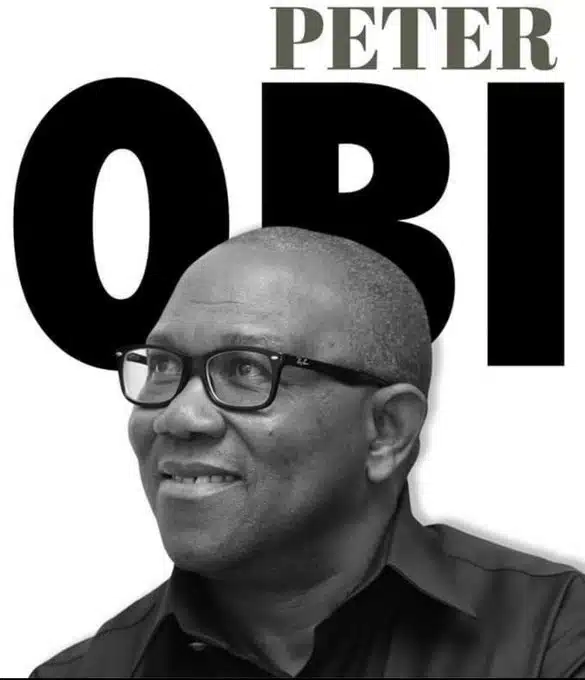

Former Anambra State Governor and presidential aspirant, Peter Obi, has expressed concern over Nigeria’s projected $11.6 billion debt servicing obligation for 2026, describing it as a development that should worry Nigerians and prompt questions about the government’s fiscal priorities.
Obi made this known on Monday in a statement shared via his official X account, where he stressed that borrowing is not inherently bad if it is managed prudently and invested in productive sectors capable of driving economic growth.
According to him, Nigeria’s current debt profile paints a different picture, as a significant portion of previous loans was allegedly used for consumption rather than sustainable development projects.
“A huge proportion of past borrowing has been directed toward consumption, with limited visible or sustainable developmental outcomes to justify the scale of indebtedness,” Obi stated.
He further noted that a large portion of the debt currently being serviced was accumulated under the administration of President Bola Ahmed Tinubu, even as the government continues to borrow at a considerable rate.
Highlighting concerns over budget priorities, Obi pointed to the proposed 2026 budget allocations, noting that health is expected to receive ₦2.46 trillion, education ₦2.56 trillion, and poverty alleviation ₦865 billion — bringing the combined allocation for the three sectors to about ₦5.885 trillion.
In contrast, he explained that the projected debt servicing figure of approximately $11.6 billion, estimated at between ₦17 trillion and ₦18 trillion depending on exchange rates, is nearly three times the combined allocations to health, education, and social protection.
Obi argued that the real issue is not borrowing itself, but whether the borrowed funds are being transformed into measurable productivity, inclusive economic growth, and improved living conditions for citizens.
“Without this, debt servicing shifts from being a temporary fiscal obligation to a long-term structural burden that constrains development and deepens economic vulnerability,” he added.
His comments come days after President Tinubu, speaking at the Africa Forward Summit co-hosted by Emmanuel Macron and William Ruto in Nairobi, disclosed that Nigeria is expected to spend about $11.6 billion on debt servicing in 2026.
Meanwhile, Obi and Rabiu Musa Kwankwaso, presidential candidates of the Labour Party and New Nigeria Peoples Party during the 2023 general election, recently joined the Nigeria Democratic Congress (NDC).
The move followed their earlier alignment with a political coalition under the African Democratic Congress (ADC), amid concerns over worsening internal party crises, external interference, and growing tensions within party structures.