

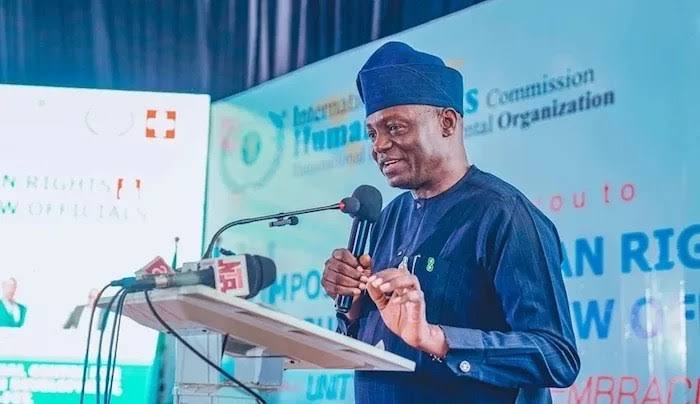

The National Chairman of the All Progressives Congress, Nentawe Yilwatda, has criticised former Vice-President Atiku Abubakar over his proposal to restore petrol subsidy if elected president in 2027.
Yilwatda described the proposal as a politically motivated policy reversal that could place additional pressure on Nigeria’s finances and undermine ongoing economic reforms.
In a statement issued on Sunday by his media aide, Abimbola Tooki, the APC chairman said Nigerians deserved more than election-season promises and urged voters to scrutinise the economic policies of all presidential candidates.
Atiku, the presidential candidate of the African Democratic Congress, had said on Wednesday that he would restore petrol subsidy if elected in 2027.
Speaking in Hausa during an interview with an ADC media group, Atiku questioned what had happened to the savings from the removal of the subsidy under President Bola Tinubu.
He said the funds were supposed to reduce poverty and improve access to education, adding that anyone who had misappropriated the money should be made to refund it.
Atiku’s position has attracted criticism because of his reported support for subsidy removal during the 2023 presidential campaign.
Reacting to the proposal, President Tinubu described it as evidence of what he called “serious ignorance of governance and economy.”
Yilwatda, speaking during a visit to the headquarters of the City Boy Movement in Abuja on Saturday, said economic policy should not be determined by electoral considerations.
“Economic policy cannot be reduced to election-season promises,” he said.
The APC chairman argued that the subsidy regime had imposed a heavy burden on public finances and created distortions in the economy.
He challenged those advocating its return to explain how the government would finance the programme, which sectors would bear the cost and whether it could be sustained without recreating the fiscal pressures that led to its removal.
Yilwatda maintained that ending the subsidy was a difficult but necessary decision, while acknowledging the need for measures to cushion its effects on Nigerians, strengthen social interventions and boost productive sectors.