

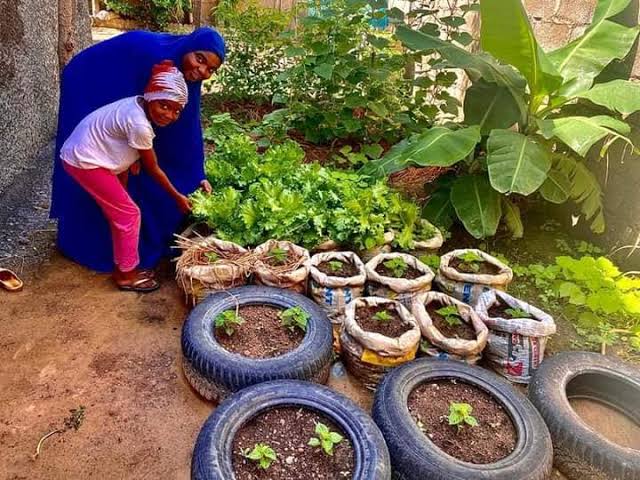

Maybe Nigerians simply do not fancy the idea of having a garden. The questions are familiar: What would I plant here? Do I have the time? Where is the space? And, more importantly, would it really make a difference?
But with the rising cost of food and pressure on household incomes, some Nigerian families are beginning to see home gardening differently, not as a hobby, but as a practical way to meet some of their everyday nutritional needs.
From vegetables and herbs to beans and other food crops, households with even limited space are turning available corners of their homes into small gardens.
For those with the space, how useful can a home garden be? What are the benefits, and why does it matter now?
Our reporter, Favour Adegbegi, who spoke with households, farmers and gardening enthusiasts found out that with the rising cost of food in Nigeria, having a home garden is becoming more than a pastime. It can help reduce household food expenses, improve nutrition and strengthen food security.
And contrary to the perception that gardening requires a large piece of land, vegetables and herbs can be grown in backyards, compounds, sacks, buckets, containers and other small spaces.
Crops such as tomatoes, pepper, ugwu, waterleaf and okra can provide families with fresh ingredients while helping them spend less on food.
However, beyond reducing expenses, home gardening can improve household nutrition. Fresh vegetables provide essential vitamins, minerals, fibre and antioxidants that contribute to a healthier diet.
It can also improve food security by allowing families to produce at least some of what they eat instead of depending entirely on the market, particularly when food prices rise sharply.
For some households, the benefits can go beyond consumption.
Surplus vegetables, fruits and herbs can be sold to neighbours, food vendors, restaurants or local markets, creating an additional source of income.
Gardening can also encourage healthier living through physical activity, access to fresh food and opportunities for families to spend time together.
There are environmental benefits too. Home gardens add greenery to residential spaces and can encourage the recycling of suitable organic waste through composting.
For children, they can become practical classrooms where they learn about agriculture, food production and the value of self-reliance.
Most importantly, starting a garden does not require waiting until you own farmland.
Five bags, a few containers or a small backyard may be enough to begin. In today’s Nigeria, growing some of your own food may be a simple but meaningful step towards reducing food expenses, improving nutrition, strengthening household food security and generating additional income.
The principle is simple: start small. Plant what you eat. Use the space you have. Harvest what you grow. Then expand.
If millions of Nigerian households adopted this approach, the collective impact on household food security and nutrition could be significant.