

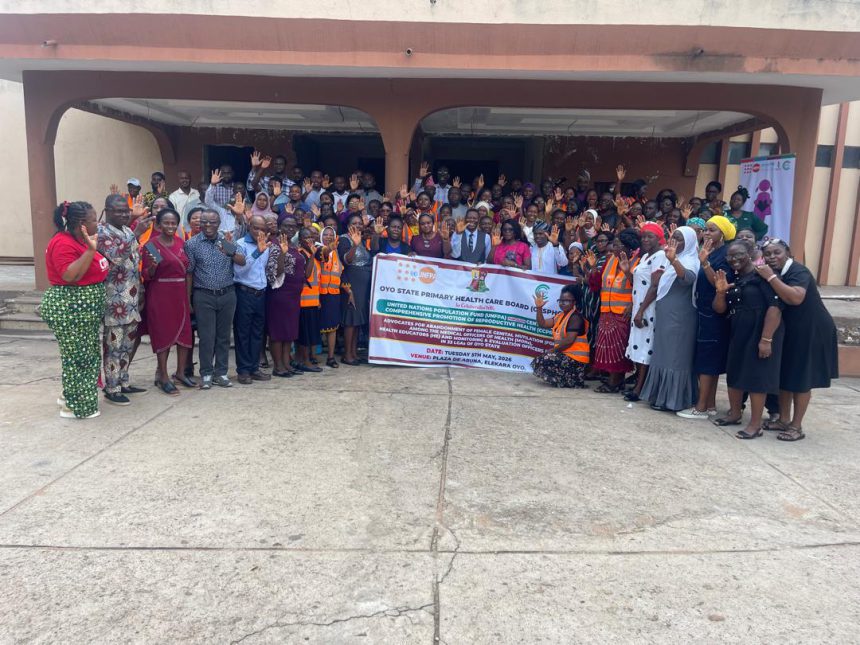

The Oyo State Primary Health Care Board, in collaboration with the United Nations Population Fund (UNFPA) through the Centre for Comprehensive Promotion of Reproductive Health (CCPRH), has organised a one-day capacity-building training to strengthen advocacy for the abandonment of Female Genital Mutilation (FGM) across the state.
The training, held at Plaza De Aruna Hotel in Oyo Town, brought together Medical Officers of Health (MOHs), Health Educators (HEs), and Monitoring and Evaluation Officers (M&Es) from all 33 local government areas of the state.
It formed part of ongoing efforts to eliminate harmful traditional practices and promote the health and rights of women and girls.
Speaking at the event, the Executive Secretary of the Oyo State Primary Health Care Board, Dr. Muideen Olatunji, represented by the Director of Special Duties, Dr. Abiodun Akeem Akande, reaffirmed the Board’s commitment to ending FGM in Oyo State.
He described Female Genital Mutilation as a harmful and outdated practise that must be eradicated through sustained advocacy, community engagement, and strengthened healthcare systems.
Dr. Olatunji stressed that primary healthcare workers play a vital role in driving behavioural change at the grassroots level, urging participants to become active advocates against FGM in their respective communities.
According to him, the training was designed to equip health workers with the knowledge and tools needed to identify, prevent, and respond effectively to cases of FGM and other forms of Gender-Based Violence (GBV).
He added that the programme would strengthen participants’ capacity to implement interventions and ensure proper referral mechanisms for survivors.
During one of the sessions, the Programme Officer, Mrs. Bilikis Olawoyin, delivered a detailed presentation on Female Genital Mutilation, covering its definition, types, prevalence, causes, and consequences, as well as emerging trends within Oyo State.
She explained that FGM, often wrongly referred to as female circumcision, has no medical benefits and exposes women and girls to severe physical, psychological, and emotional complications.
Mrs. Olawoyin also highlighted socio-cultural factors sustaining the practice, including myths, misconceptions, and societal pressure, while emphasizing the need for collective efforts to end it.
Participants were equally trained on appropriate referral pathways for survivors of Gender-Based Violence and FGM, with emphasis placed on ensuring victims receive timely medical care, psychosocial support, and legal assistance where necessary.
Participants were encouraged to intensify awareness campaigns and promote behavioural change in their communities to safeguard the rights and well-being of girls.
As part of efforts to support community outreach activities, health educators were provided with identification jackets, Information, Education and Communication (IEC) materials, and reporting booklets to aid their fieldwork and documentation.
The Oyo State Primary Health Care Board reiterated its commitment to working closely with development partners, stakeholders, and community leaders to ensure the total abandonment of FGM in the state.