


The Lagos State Government has announced plans to deliver over 14,000 housing units by the first quarter of 2027 as part of ongoing efforts to reduce the state’s housing deficit.
The government also disclosed that 10,623 housing units have been delivered within the last seven years under the administration of Governor Babajide Sanwo-Olu.
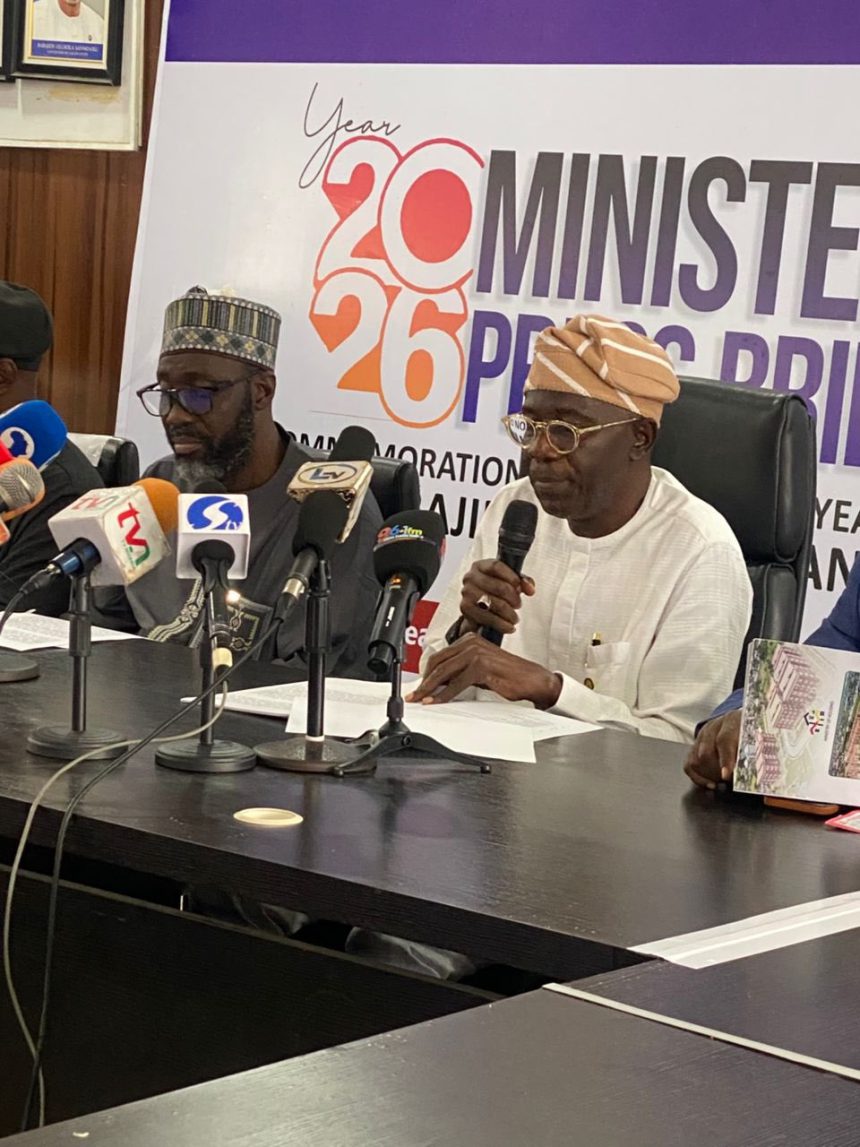
The Commissioner for Housing, Moruf Akinderu-Fatai, made the disclosure on Tuesday during a ministerial press briefing held at Alausa, Ikeja, marking the third year of the governor’s second term in office.
According to him, the administration has adopted a combination of direct government funding and Public-Private Partnerships (PPPs) to address the shortage of affordable housing in the state.
He said the government has rolled out several initiatives aimed at expanding access to decent housing for residents across income levels.
Akinderu-Fatai noted that the Akinsanya Sunny Ajose Estate Phase One, comprising 420 housing units, was commissioned in October 2025, while another 233 units at the Abraham Adesanya Housing Estate, developed in partnership with Urban Shelter, were commissioned in November 2025.
He added that these projects bring the total number of completed housing estates under the current administration to 23 across the five divisions of Lagos since 2019.
The commissioner explained that 4,414 housing units were delivered through direct government funding, while PPP arrangements contributed 6,209 units.
On affordability, he said the Lagos State Mortgage Board has supported more than 20,000 residents through mortgage and rent-to-own schemes over the past 12 years.
He revealed that 100 beneficiaries completed payments and became homeowners in 2024, while another 110 successfully exited the scheme in 2025.
The state government, he added, is planning to introduce monthly and quarterly rent payment systems to ease the financial burden of annual rent on residents.
According to him, the initiative is designed to complement the existing rent-to-own programme and provide relief, especially for low-income earners.
Akinderu-Fatai also disclosed that the housing sector created 4,793 direct and indirect jobs over the past year across skilled and unskilled labour categories.
However, he identified challenges affecting housing delivery in the state, including land encroachment, litigation, inflation, limited allocation capacity, and defaulting beneficiaries.