

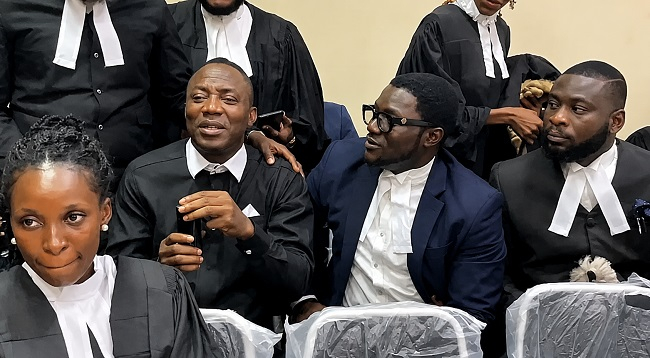

The Federal High Court in Abuja has rejected a document presented by African Action Congress (AAC) presidential candidate Omoyele Sowore as part of his defence in the cybercrime case filed against him by the Department of State Services (DSS).
Sowore’s trial continued on Wednesday, with the court ruling against the admission of the document after the DSS challenged its validity.
The activist and politician, through his legal team led by Senior Advocate of Nigeria (SAN) Olumide Fusika, had sought to tender the documents through his third defence witness, lawyer Wayne Chikezie Elijah.
The documents contained a summary of proceedings involving testimony from a DSS witness identified as XYZ, alongside letters that Sowore’s lawyers argued would support his defence.
However, DSS counsel Akinlolu Kehinde, SAN, objected to the documents being admitted, arguing that they were public documents that had not been properly certified as required under the Evidence Act.
Kehinde urged the court to reject the exhibits, stating that failure to certify the documents meant they did not meet the legal requirements for admissibility.
Sowore’s lawyers argued that the documents were obtained from court records and therefore did not require certification.
However, Justice Mohammed Umar disagreed, ruling that the court could not verify whether the documents had been altered while in the custody of a lawyer who previously handled the matter.
“The reason for certification is to be sure the document has not been tampered with,” Justice Umar said.
The judge subsequently refused the application and marked the documents as rejected. He adjourned the case until July 28 for continuation of hearing.
Sowore is facing a two-count charge brought by the DSS over a social media post in which he allegedly described President Bola Tinubu as a “criminal.”
He pleaded not guilty to the charges filed under sections of the Cybercrimes (Prohibition, Prevention, Etc.) (Amendment) Act, 2024.
The charges relate to posts made on August 25, 2025, following President Tinubu’s remarks in Brazil that his administration had successfully tackled corruption in Nigeria.
The DSS alleges that the posts were defamatory, capable of causing public disorder and damaging to the president’s reputation. The agency also sought the removal of the posts and requested action against Sowore’s accounts on social media platforms before filing the charges.
Social media companies X (formerly Twitter) and Meta were initially listed as co-defendants but were later removed from the amended charge.